Yellow River Civilization
Introduction
The Yellow River Civilization, one of the cradles of Chinese civilization, has significantly shaped the cultural, historical, and social landscape of China. This civilization arose in the Yellow River basin, an area characterized by its majestic natural landscapes, including steep canyons, deserts, and grasslands. The basin is home to numerous cultural relics, with twenty World Heritage Sites and over 300,000 non-movable cultural relics. The civilization is renowned for its contributions to art, philosophy, and the development of language and literature, which continue to influence contemporary Chinese culture and beyond.
Geography and Environment
The Yellow River basin stretches across several provinces in China, including Qinghai, Ningxia, Inner Mongolia, Shanxi, Henan, and Shandong. This region is marked by diverse landscapes such as the Qinghai-Tibet Plateau, the deserts of Ningxia, the grasslands of Inner Mongolia, and the fertile plains of Henan. Each area within the basin exhibits unique environmental features, from the high-altitude climates of Qinghai to the temperate and fertile lands of the central plains. The river itself, China's second-longest, flows for 5,464 kilometers and provides essential water resources for agriculture and settlements along its course. The basin's environment has played a critical role in shaping the settlement patterns and economic activities of its inhabitants.
Historical Development
Prehistoric Era
The prehistoric era of the Yellow River Civilization is witnessed through artifacts and relics that provide insights into the early human settlements and cultural practices. Museums such as the Qinghai Museum preserve chipped stone tools from the Paleolithic Age and colored pottery from the Neolithic Age, illustrating the technological advancements and artistic expressions of early inhabitants. Prehistoric painted pottery from Gansu province highlights the artistic features and cultural developments over a period of 5,500 years, indicating a rich tradition of craftsmanship and societal organization.
Early Dynasties
The Yellow River region was central to the formation of early Chinese dynasties. The Henan Museum houses relics from the Shang Dynasty (c.16th century-11th century BC) and the Western Zhou Dynasty (c.11th century-771 BC), showcasing the development of metallurgy and sophisticated bronze works. These periods witnessed the establishment of political and social structures that would lay the foundation for successive Chinese dynasties. The emergence of the Xia, Shang, and Zhou dynasties marked significant advancements in governance, social hierarchy, and cultural achievements.
Classical Period
During the classical period, the Yellow River basin became a hub of cultural and intellectual activity. The region was a fertile ground for the development of Chinese philosophy, with schools of thought such as Confucianism and Taoism emerging and gaining prominence. The basin's cities were influential in the political and economic spheres, contributing to the cultural and intellectual flourishing of ancient China. This period saw the consolidation of traditions and institutions that have endured through Chinese history.
Cultural Contributions
Philosophy and Religion
The Yellow River Civilization is credited with nurturing major philosophical and religious traditions that have had a lasting impact on Chinese society. Confucianism and Taoism, both of which originated in this region, have shaped the moral and ethical frameworks of Chinese culture. The area's cultural heritage is also rich in Buddhist influences, as evidenced by historical sites like Wutai Mountain, a significant Buddhist center with ancient temples and religious relics.
Art and Architecture
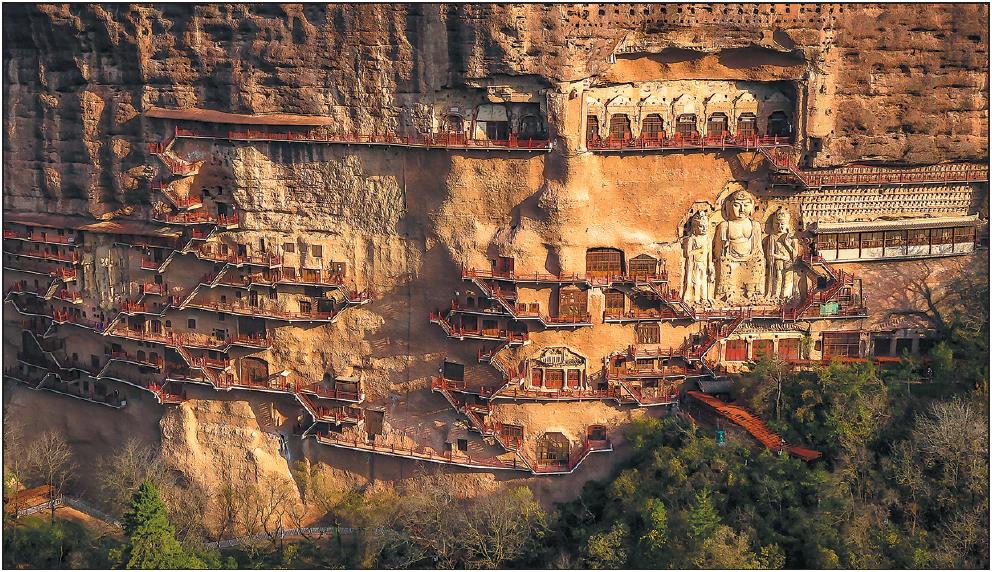
Art and architecture from the Yellow River Civilization reflect the region's cultural diversity and historical depth. The Longmen Grottoes in Henan and the Mogao Caves in Gansu are exemplary of the intricate artistry and religious devotion that characterized the civilization. These sites preserve thousands of Buddhist statues, frescoes, and carvings, showcasing the sophistication of ancient Chinese artisans. The architectural styles developed during this period influenced palace and temple designs throughout China.
Language and Literature
The Yellow River Civilization contributed significantly to the development of Chinese language and literature. The region's historical texts, inscriptions, and literary works have been crucial in understanding the evolution of the Chinese script and linguistic traditions. The calligraphy and literary styles from this period continue to be revered for their aesthetic and cultural value, influencing successive generations of writers and scholars.
Economy and Society
Agriculture was the backbone of the Yellow River Civilization, with the river providing essential resources for irrigation and crop cultivation. The fertile plains along the river supported the growth of staple crops such as millet and later wheat, leading to agricultural surplus and population growth. This agricultural foundation enabled the development of complex societies and urban centers. The region's strategic location allowed it to interact with other civilizations, contributing to its economic prosperity. The presence of markets and trading posts along the river fostered commercial activities, making the Yellow River Civilization a significant player in early Chinese trade networks.
Legacy and Influence
The legacy of the Yellow River Civilization is profound, as it laid the groundwork for the development of Chinese culture, institutions, and social systems. Its traditions and innovations have continued to influence Chinese society throughout history. The civilization's contributions to art, philosophy, and governance have had far-reaching impacts, shaping cultural identities and historical narratives not only within China but also in neighboring regions.
Archaeological Discoveries
Significant archaeological discoveries in the Yellow River basin have provided valuable insights into the civilization's history and cultural practices. Sites such as the Yinxu Ruins and the Emperor Qinshihuang's Mausoleum have revealed advanced metallurgical techniques, artistic expressions, and burial customs. These findings have enhanced our understanding of the complexity and richness of the Yellow River Civilization.
Modern Study and Research
Modern research into the Yellow River Civilization continues to uncover new dimensions of its history and cultural significance. Collaborative efforts between museums and cultural organizations, such as the establishment of a museum alliance in Zhengzhou, aim to preserve and promote its cultural heritage. These initiatives underscore the importance of the Yellow River as a source of national identity and a subject of academic and public interest.








